


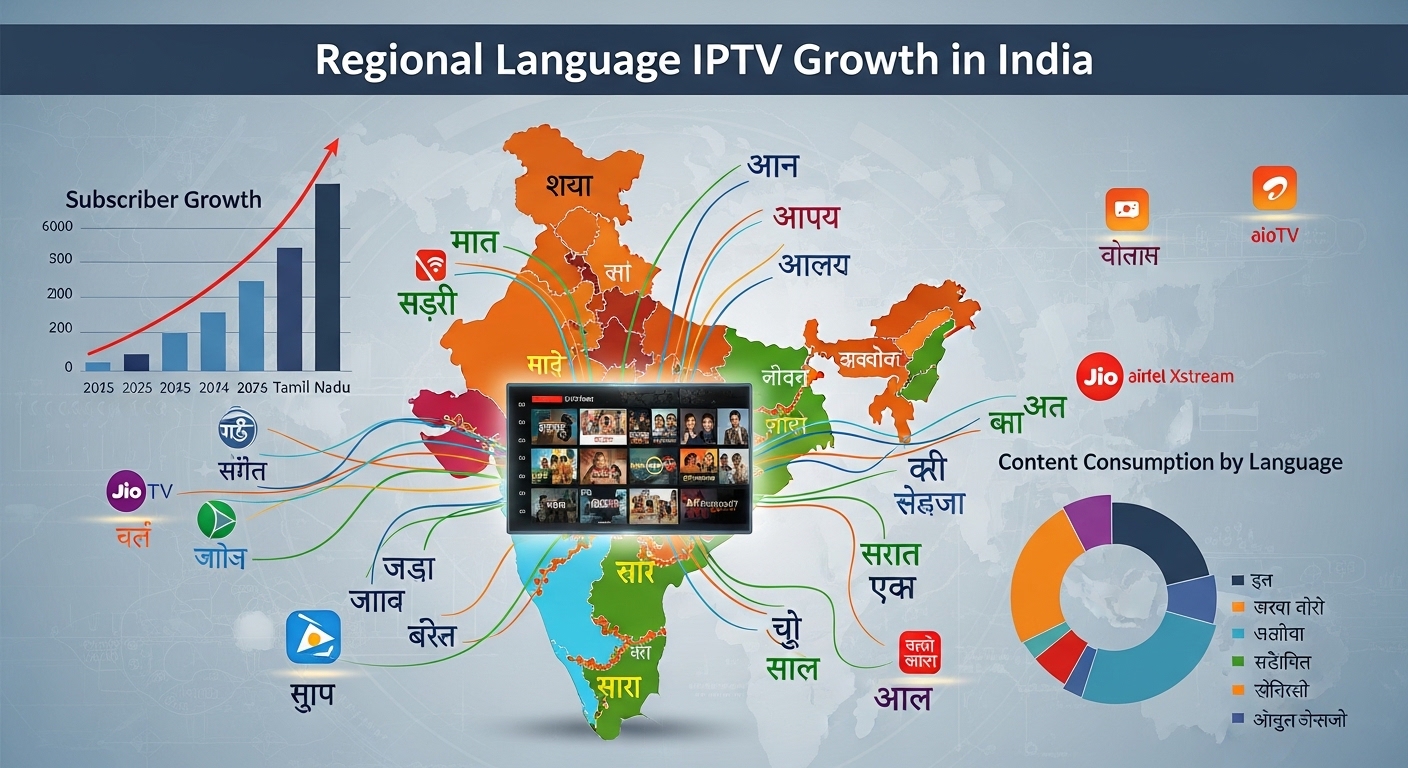
Regional Language IPTV Growth in India
The Indian television landscape is undergoing a major transformation. With a surge in digital access, IPTV (Internet Protocol Television) is rapidly gaining ground, especially among audiences looking for content in their native languages. Platforms like Indian IPTV are leading this shift, offering diverse regional language channels to meet a growing demand that traditional DTH providers often ignore.
Why Regional Language Content Matters More Than Ever
India is home to over 20 officially recognized languages and thousands of dialects. While Hindi remains the most widely spoken language, regional languages such as Telugu, Tamil, Malayalam, Bengali, Marathi, and Kannada have massive viewership bases.
For decades, mainstream broadcasters prioritized Hindi and English content, leaving regional viewers underserved. That gap is now being filled by IPTV services, which deliver:
- Local language entertainment and movies
- Region-specific news and current affairs
- Devotional programming tied to local traditions
- Children’s content with cultural relevance
- Educational and spiritual shows in native languages
This isn’t just a content strategy—it’s a cultural shift. Viewers prefer content that reflects their language, identity, and traditions, and IPTV is delivering on that expectation.
IPTV as a Driver of Language-Based Personalization
Traditional satellite and cable providers work with limited bandwidth and rigid content packaging. IPTV operates differently. It uses internet-based delivery, enabling more personalized and language-specific offerings without geographical constraints.
This allows users to:
- Choose packages based on preferred languages
- Access hyper-local channels even outside the region
- Stream live or on-demand content relevant to their community
For example, a Marathi-speaking viewer in Bengaluru or a Malayalam-speaking student in Delhi can access full-fledged programming in their native language—something traditional TV doesn’t easily allow.
The Role of Internet Penetration in Regional IPTV Growth
India now has over 900 million internet users, and most of this growth comes from tier-2 and tier-3 cities where regional language is the primary mode of communication. According to Google-KPMG studies, nearly 75% of new internet users in India prefer vernacular content over English.
This massive user base is directly feeding into the IPTV ecosystem:
- Affordable data plans make streaming viable
- Smart TVs and mobile devices support IPTV apps
- Regional users demand content in their native tongues
- Flexible pricing allows IPTV to scale across income levels
As more users go online, the appetite for regional content grows—and IPTV is built to meet that demand efficiently.
Why IPTV Succeeds Where DTH Struggles
DTH services face several limitations when catering to a multilingual, geographically dispersed audience:
| Feature | DTH/Cable TV | IPTV Platforms |
| Regional language support | Limited and bundled | Extensive and customizable |
| Geographical coverage | Fixed infrastructure needed | Internet-based; global availability |
| Device flexibility | Mostly TV | TV, mobile, tablet, PC |
| Package personalization | Minimal | Language and genre-specific packages |
| On-demand content | Very limited | Widely available |
IPTV’s flexibility allows content providers to build packages around language preferences instead of forcing generic bundles.
Telugu IPTV: A Model of Regional Success
One of the clearest examples of regional IPTV growth is in the Telugu-speaking market. Telugu is spoken by over 80 million people in Andhra Pradesh, Telangana, and across diaspora communities in the US, UK, and Australia.
Services like Telugu IPTV have seen significant demand by offering:
- ETV Telugu, Gemini TV, and Zee Telugu
- TV9 Telugu and V6 News for real-time updates
- SVBC, Bhakti TV, and TTD channels for devotional content
- 24/7 Telugu movie, music, and children’s programming
This language-first approach boosts user retention, improves satisfaction, and taps into deeply rooted cultural habits. It’s no surprise that Telugu IPTV subscriptions are growing not just in India, but also in NRI-heavy regions abroad.
Content Diversity Beyond Entertainment
Regional IPTV isn’t limited to entertainment. It serves other important content verticals:
- Religious programming: Aarti, bhajans, live temple broadcasts in Tamil, Telugu, and Malayalam
- Agriculture updates: In languages like Kannada and Marathi for rural viewers
- Education: Learning channels for children in mother tongues
- Healthcare & public information: COVID-19 updates, government schemes in local dialects
This type of targeted information is critical for audience groups that aren’t fluent in English or Hindi. IPTV democratizes access to this content.
Urban and Diaspora Demand for Regional Content
It’s not just rural India driving the trend. Urban audiences, especially second-generation families in metros, use regional content to stay connected with their roots. Similarly, Indian expats across the globe—particularly in the US, Canada, and Gulf nations—seek culturally familiar programming.
With IPTV:
- Diaspora families can watch Indian festivals, movies, and live events
- Children can learn their native language through age-appropriate shows
- Adults stay connected with regional news and politics
The convenience of watching this content on smartphones, tablets, or smart TVs makes IPTV the preferred choice abroad.
Smart TVs and Regional IPTV: A Seamless Experience
Smart TVs play a crucial role in regional IPTV growth. Most IPTV apps are compatible with Android TV, Fire Stick, Roku, Apple TV, and other streaming platforms.
This ensures that regional content is not limited to mobile phones but is accessible on large screens without extra hardware. The UI in many of these apps supports multiple languages, making navigation easier for native speakers.
Users can:
- Watch live content with one click
- Search programs by language or genre
- Save channels or shows to favorites
- Schedule reminders for key broadcasts
This smooth, on-screen experience strengthens user loyalty and keeps regional viewers engaged.
The Future of Regional IPTV in India
With India’s linguistic diversity and fast digital adoption, regional IPTV is not a niche—it’s the new mainstream. The next wave of growth will likely focus on:
- Hyper-local content from district and village levels
- More interactive features like polls, chats, and community TV
- Regional OTT-style series in Tamil, Telugu, and Bengali
- Integration with smart home platforms for voice-controlled navigation
As more users shift to mobile-first or app-based viewing, regional IPTV will become the dominant method for consuming local language content.
Indian IPTV is positioned at the heart of this change—bridging the digital and linguistic gaps that traditional broadcasters have failed to address. With tailored packages like Telugu IPTV and a user-centric approach, it’s enabling millions to watch, learn, and connect in the language that feels like home.


