



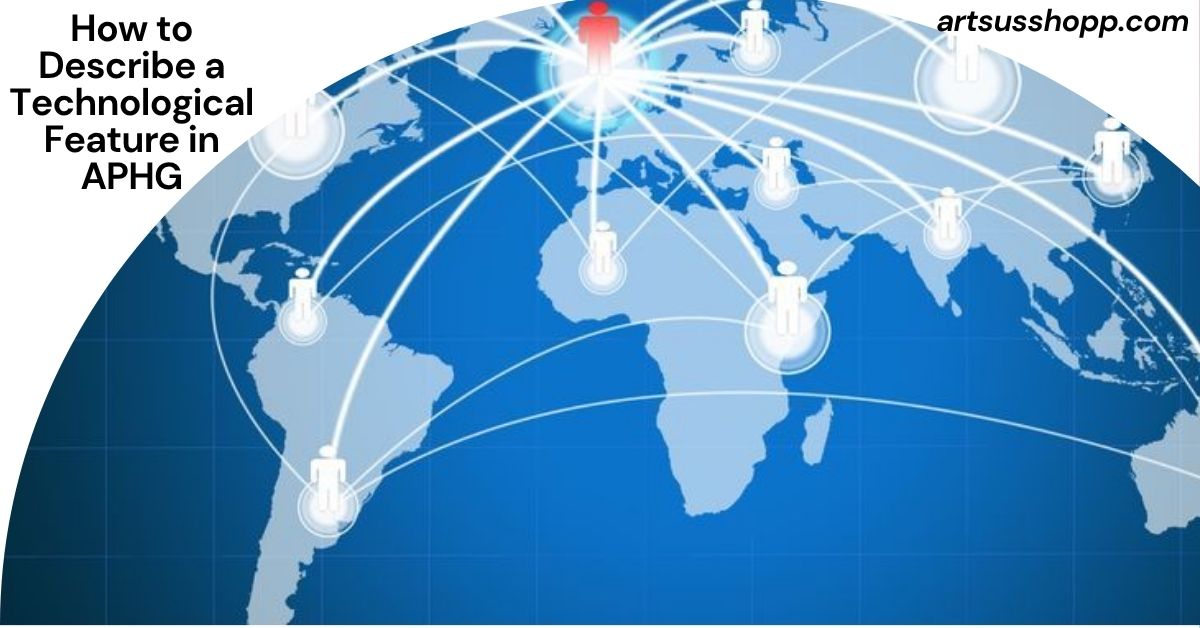
How to Describe a Technological Feature in APHG: A Complete Student Guide for Success
If you are taking Advanced Placement Human Geography (APHG), you will often come across questions that ask you to explain, analyze, or describe technology and its impact on people, places, and environments. Many students understand what technology is, but they struggle when asked how to describe a technological feature in APHG using academic language and geographic concepts.
Learning how to describe a technological feature in APHG is an important skill because technology affects transportation, agriculture, communication, migration, urban development, economic growth, and cultural diffusion. Whether you are writing a free-response question (FRQ), preparing for an exam, or completing a class assignment, knowing how to clearly describe technological features can improve your scores and strengthen your understanding of human geography.
This comprehensive guide explains exactly how to describe a technological feature in APHG, provides examples, explores common mistakes, and offers expert strategies that go beyond basic definitions. By the end of this article, you will know how to write stronger APHG responses and connect technology to important geographic concepts.
What Is a Technological Feature in APHG?
In AP Human Geography, a technological feature refers to any tool, innovation, system, machine, or technological advancement that affects human activity, spatial patterns, or interactions between people and places.
Technological features can be physical or digital. They often influence how societies produce goods, communicate, travel, and organize economic activities.
Examples include:
- Smartphones
- Internet networks
- High-speed rail systems
- GPS technology
- Irrigation systems
- Agricultural machinery
- Satellites
- Renewable energy systems
- Container shipping technology
- Artificial intelligence tools
In APHG, technology is not studied simply as an invention. Instead, students examine how technology changes geographic patterns and human behavior.

Why Technology Matters in Human Geography
Technology plays a major role in shaping the world. Human geographers study technology because it influences:
- Population distribution
- Urban growth
- Economic development
- Cultural diffusion
- Transportation networks
- Agricultural production
- Environmental sustainability
- Globalization
For example, the internet has made communication between countries almost instant. This technological advancement has increased globalization and connected businesses, governments, and individuals worldwide.
Understanding these relationships helps students explain geographic processes more effectively.
How to Describe a Technological Feature in APHG
When learning how to describe a technological feature in APHG, it is important to move beyond simply naming the technology.
A strong APHG description should include four key elements:
Identify the Technology
Start by clearly stating what the technological feature is.
Example:
“The technological feature is a GPS navigation system that uses satellite signals to determine location.”
This provides a clear foundation for the rest of your response.
Explain Its Purpose
Describe what the technology does and why people use it.
Example:
“GPS technology helps individuals and businesses determine precise locations and optimize travel routes.”
This shows understanding rather than simple recognition.
Connect It to Human Geography
This is the most important step in APHG.
Explain how the technology affects people, places, or geographic processes.
Example:
“GPS technology improves transportation efficiency by reducing travel times and supporting logistics networks.”
The geographic connection is what AP graders look for.
Analyze Its Impact
Go one step further by discussing the broader effects.
Example:
“Improved navigation contributes to economic development because goods can be transported more efficiently between regions.”
Analysis demonstrates higher-level thinking.
A Simple Formula for APHG Responses
Students can use this easy formula:
Technology + Function + Geographic Impact + Broader Significance
Example:
“Container shipping technology allows large quantities of goods to be transported efficiently across oceans. This reduces transportation costs and supports global trade networks. As a result, countries become more interconnected through globalization.”
This formula works well for FRQs and classroom assignments.
Also Read: How Do You Spell Technology? Complete Guide to Correct Spelling, Meaning, Usage, and Common Mistakes
Examples of Technological Features in APHG
Internet Technology
The internet is one of the most influential technological features in modern geography.
Description:
“The internet is a communication technology that allows instant exchange of information across the world. It promotes cultural diffusion by spreading ideas, languages, and media between different societies. The internet also supports globalization by connecting businesses and consumers across international boundaries.”
High-Speed Rail
Transportation technologies frequently appear in APHG discussions.
Description:
“High-speed rail systems are transportation technologies designed to move passengers quickly between cities. They reduce travel times, increase regional connectivity, and encourage economic development by making urban centers more accessible.”
Agricultural Machinery
Agriculture is a major APHG topic.
Description:
“Agricultural machinery such as tractors and harvesters increases farming efficiency. These technologies allow farmers to cultivate larger areas of land and produce greater yields. As a result, agricultural productivity increases and fewer workers are required in the farming sector.”
Renewable Energy Technology
Environmental topics are increasingly important in APHG.
Description:
“Solar panels are renewable energy technologies that convert sunlight into electricity. They reduce dependence on fossil fuels and support sustainable development by lowering greenhouse gas emissions.”
Mobile Phones
Mobile technology has transformed communication globally.
Description:
“Mobile phones allow people to communicate instantly across long distances. This technology improves access to information, supports economic activities, and facilitates cultural exchange between regions.”
Technological Features and Geographic Concepts
To fully understand how to describe a technological feature in APHG, students must connect technology to major AP Human Geography concepts.
Diffusion
Diffusion refers to the spread of ideas, innovations, or cultural traits.
Technologies often spread through:
- Relocation diffusion
- Hierarchical diffusion
- Contagious diffusion
Example:
“Smartphone technology spread through hierarchical diffusion, initially becoming popular in major cities before reaching smaller communities.”
Globalization
Technology is one of the primary drivers of globalization.
Examples include:
- Internet communication
- International shipping
- Digital banking
- E-commerce platforms
Technology allows countries to interact more closely than ever before.
Urbanization
Technology influences urban growth and city development.
Examples:
- Smart city infrastructure
- Public transportation systems
- Digital communication networks
These innovations improve efficiency and quality of life in urban areas.
Economic Development
Many countries invest in technology to stimulate economic growth.
Technological advancements can:
- Increase productivity
- Create jobs
- Improve infrastructure
- Expand trade opportunities
Sustainability
Modern technology often focuses on environmental protection.
Examples:
- Wind turbines
- Solar energy
- Electric vehicles
- Smart energy grids
These technologies help reduce environmental impacts while supporting development.
Common APHG Exam Questions About Technology
Students may encounter technology-related questions in various forms.
Examples include:
- Describe a technological innovation.
- Explain how technology affects agriculture.
- Identify a technological factor contributing to globalization.
- Analyze the impact of transportation technology.
- Discuss how communication technology influences cultural diffusion.
The key is always connecting the technology to geographic processes.
How AP Graders Evaluate Technology Descriptions
APHG graders look for more than simple definitions.
Strong responses usually include:
- Accurate identification
- Clear explanation
- Geographic connection
- Specific examples
- Cause-and-effect analysis
Weak response:
“The internet is technology that helps people communicate.”
Strong response:
“The internet is a communication technology that allows people to exchange information instantly across long distances. It promotes globalization by connecting businesses, governments, and individuals worldwide.”
The second example demonstrates geographic understanding.
Common Mistakes Students Make
Only Defining the Technology
Many students stop after providing a definition.
Incorrect:
“GPS is a navigation system.”
Better:
“GPS is a navigation system that uses satellites to determine locations and improve transportation efficiency.”
Forgetting Geographic Connections
APHG focuses on geography, not engineering.
Always ask:
“How does this technology affect people, places, or environments?”
Using Vague Language
Avoid statements like:
- It helps society.
- It improves things.
- It is useful.
Be specific.
Instead write:
“It reduces transportation costs and increases trade efficiency.”
Ignoring Broader Impacts
Technology descriptions should include consequences.
Ask:
- What changes because of this technology?
- Who benefits?
- How does it affect geographic patterns?
Technology in Major APHG Units
Unit 1: Thinking Geographically
Technology helps geographers collect and analyze spatial data.
Examples:
- GIS
- GPS
- Remote sensing
Unit 2: Population and Migration
Technology affects migration patterns by improving communication and transportation.
Examples:
- Social media
- Air travel
- Mobile communication
Unit 3: Cultural Patterns
Technology accelerates cultural diffusion.
Examples:
- Streaming platforms
- Social networks
- Online education
Unit 4: Political Geography
Governments use technology for administration, security, and communication.
Examples:
- Surveillance systems
- Digital governance
- Geographic databases
Unit 5: Agriculture
Technology increases agricultural productivity.
Examples:
- Irrigation systems
- Biotechnology
- Farm machinery
Unit 6: Cities and Urban Land Use
Technology shapes urban infrastructure.
Examples:
- Smart transportation
- Urban planning software
- Energy-efficient buildings
Unit 7: Industrial and Economic Development
Technology drives industrial growth and economic modernization.
Examples:
- Automation
- Robotics
- Artificial intelligence
Modern Technological Features Relevant to APHG
As technology evolves, newer innovations are becoming increasingly relevant to geographic discussions.
Artificial Intelligence
Artificial intelligence is transforming industries worldwide.
Geographic impacts include:
- Increased productivity
- Labor market changes
- Economic restructuring
- Smart city development
Remote Work Technology
Video conferencing and cloud computing have changed workplace geography.
Effects include:
- Reduced commuting
- Population shifts
- Increased flexibility
- Growth of digital economies
E-Commerce Platforms
Online shopping technologies affect retail geography.
Impacts include:
- Growth of distribution centers
- Increased logistics activity
- Changes in consumer behavior
Electric Vehicles
Electric transportation technologies support sustainability goals.
Benefits include:
- Reduced emissions
- Lower fuel consumption
- Cleaner urban environments
Sample APHG Responses
Example 1
Question:
Describe a technological feature that has influenced globalization.
Also Read: When Is Technology Invented? A Complete Guide to the History, Evolution, and Future of Technology
Response:
“The internet is a technological feature that enables instant communication across the world. It has influenced globalization by connecting businesses, consumers, and governments across international boundaries. This increased connectivity allows information, ideas, and economic activities to move more rapidly between countries.”
Example 2
Question:
Describe a technological feature affecting agriculture.
Response:
“Modern irrigation systems are technological features that provide water directly to crops. These systems increase agricultural productivity by improving water efficiency and allowing farming in regions with limited rainfall. As a result, food production can increase while reducing water waste.”
Example 3
Question:
Describe a transportation technology and its geographic impact.
Response:
“Container shipping is a transportation technology that standardizes cargo movement across ships, trucks, and trains. This innovation lowers shipping costs and improves trade efficiency. It has contributed significantly to globalization by enabling large-scale international trade.”
Expert Tips for Writing High-Scoring APHG Answers
Use Specific Examples
Specific technologies make responses stronger.
Instead of:
“Transportation technology.”
Use:
“High-speed rail systems.”
Explain Cause and Effect
Always show how one thing leads to another.
Example:
“Improved transportation reduces travel times, which increases regional economic integration.”
Include APHG Vocabulary
Useful terms include:
- Globalization
- Diffusion
- Urbanization
- Sustainability
- Connectivity
- Infrastructure
- Development
- Spatial interaction
Think Like a Geographer
Ask questions such as:
- How does this technology change spatial patterns?
- How does it affect human behavior?
- What geographic processes are involved?
The Future of Technology in Human Geography
Technology will continue to reshape geographic patterns in the coming decades.
Emerging trends include:
- Artificial intelligence
- Autonomous vehicles
- Smart cities
- Renewable energy systems
- Advanced telecommunications
- Space-based technologies
Human geographers will increasingly study how these innovations affect societies, economies, and environments around the world.
Students who understand these connections will be better prepared for APHG exams and future academic studies.
Also Read: What Is Wearable Technology? Complete Guide to Smart Wearable Devices in 2026
Conclusion
Understanding how to describe a technological feature in APHG is an essential skill for success in Advanced Placement Human Geography. A strong response goes beyond identifying a technology and explains its function, geographic significance, and broader impact on society.
The best APHG answers connect technological features to important concepts such as globalization, diffusion, urbanization, economic development, and sustainability. Whether discussing the internet, GPS, agricultural machinery, renewable energy, or artificial intelligence, students should focus on how technology shapes human interactions and geographic patterns.
By using clear explanations, specific examples, and geographic analysis, you can create high-scoring responses that demonstrate a deep understanding of human geography. Mastering how to describe a technological feature in APHG will not only improve exam performance but also help you better understand the rapidly changing world around you.
FAQs About How to Describe a Technological Feature in APHG
What does APHG stand for?
APHG stands for Advanced Placement Human Geography, a college-level course that explores how humans interact with places, environments, and geographic systems.
Why are technological features important in AP Human Geography?
Technological features influence transportation, communication, agriculture, economic development, migration, and globalization, making them important topics in human geography.
Can a technological feature be digital?
Yes. Digital technologies such as smartphones, cloud computing, artificial intelligence, and the internet are all considered technological features.
How long should a technology description be on an APHG exam?
Most exam responses should be concise but complete. A few well-developed sentences that explain the technology and its geographic impact are usually sufficient.
What APHG vocabulary should I use when describing technology?
Useful terms include globalization, diffusion, sustainability, connectivity, infrastructure, urbanization, spatial interaction, economic development, and cultural exchange.
Is GPS considered a technological feature in APHG?
Yes. GPS is a technological feature because it uses satellite systems to improve navigation, transportation, logistics, and geographic data collection.
How does technology relate to globalization?
Technology increases communication, transportation efficiency, and information exchange, making countries and regions more interconnected through globalization.
What is the easiest way to describe a technological feature in APHG?
Use this simple structure:
Identify the technology → Explain its function → Connect it to geography → Discuss its impact.
This approach helps create clear, organized, and high-scoring APHG responses.
Can artificial intelligence be used as an APHG example?
Yes. Artificial intelligence is a modern technological feature that affects economic development, labor markets, urban planning, and industrial production.
What is the biggest mistake students make when describing technology in APHG?
The most common mistake is only defining the technology without explaining its geographic effects. APHG focuses on human and spatial impacts, not just technical definitions.


