



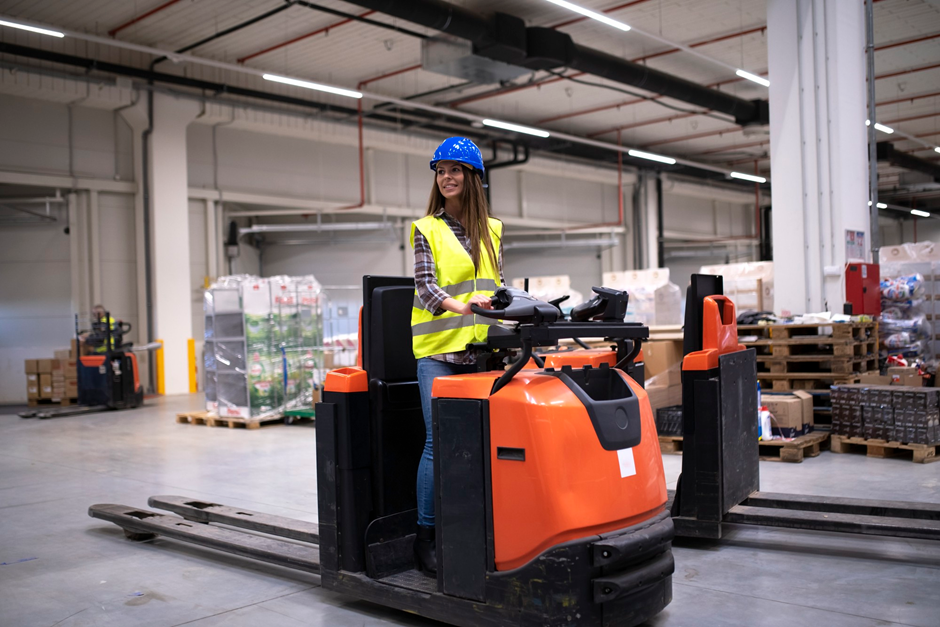
What is included in forklift training in Cheltenham?
Are you planning to take a professional forklift training course in Cheltenham? Then you must know what the courses should offer. In this guide, we will take you through the expected course materials included in the forklift training course.
Did you know that approximately 1,300 people are involved in forklift-related accidents every year in the UK? Surprisingly, these accidents do not involve the forklift drivers, but rather the people around them. So, you must have proper forklift training to reduce the risk of accidents.
A forklift training course must have two distinct parts: theory and practical. In the theoretical classes, you should know all about the forklift vehicle, and then get to look at the physical parts of the truck to have a better understanding of how you can operate it.
Why Forklift Training is Important?
A forklift training from a reliable training centre in Cheltenham will ensure that you can operate the forklift safely and no one around gets hurt. At the same time, a forklift training in Cheltenham should teach you to identify early faults and malfunctions in the truck.
So, you can take immediate measures to resolve them. Besides, as a forklift operator, you will be working amongst the workers. Your skills in carefully handling the forklift will reduce the chance of accidents and reduce business downtime. All of these can be possible after going through forklift training.
Things to Expect in a Forklift Training
As mentioned in the above section, an ideal forklift training should have two parts, theoretical and practical classes. Not to mention the evaluation part towards the end of the training.
Let’s see what things should be included in a forklift telehandler training program.
Theoretical Training
If you have opted for an NPORS-accredited training, it should have the following aspects covered:
Safety in Working with Lift Trucks
The Health and Safety Executive has published a guideline to safely handle forklift trucks and ensure the safety of all involved in the scene. A forklift training in Cheltenham must include it in the training program.
From identifying the types of lift trucks available to training, lift truck operation, and protecting the pedestrians, the guide covers it all.
Health & Safety at Work Act, 1974
The Health & Safety at Work Act. 1974 in the UK laid the backbone of safety measures to be taken in the workplace. The Act outlines the duty of employers to employees, the duty of premises owners to ensure the safety of other people present. So, if you are planning to operate a forklift telehandler, you should check if the forklift telehandler training course includes the basic concepts of the Act.
Lifting Operations and Lifting Equipment Regulations (LOLER)
Often abbreviated as LOLER, the regulation identifies the duties of people and companies who own or operate, or control, lifting equipment. The main aim of the regulation is to reduce the risk of hurting others while handling the lifting equipment. Through proper planning, risk assessment, and employing a competent person to handle lifting equipment, the regulation prepares forklift operators to complete the job successfully.
Besides introducing the related regulations and laws for ensuring safety, the training should teach how to inspect the ruck before operating it. The concept of the centre of gravity and the truck should also be theoretically discussed. It will lead to better load handling by the operators.
Practical Training
The practical training should consider the following aspects of truck handling:
Forklift Controls
A forklift control includes a steering wheel, accelerator/brake pedals, and a directional lever. Besides, it also has hydraulic levers to lift, lower, or move weights with the forks. Any forklift training in Cheltenham must include a practical demonstration of the controls to safely handle the vehicle.
Weight Assessment
The training should include a proper way to calculate the load to be carried by the fork. The operator should check the actual load weight and, carrying capability of the fork. The forklift telehandler training should also include load centre and stability calculation.
Driving on/off ramps
Practical training on driving the forklift on or off the ramp teaches the operator how to control the vehicle. It should teach how to drive the truck when loaded or unloaded to safely operate it. For example, the truck should be facing uphill when loaded.
Vehicle Loading and Unloading
It should include checking the load weight, vehicle condition, and capacity to carry the loads. The load handling involves clear communication, proper weight distribution to ensure that the forklift does not tilt.
In Conclusion
The forklift telehandler training should include an introduction to all the regulations and laws in the UK that an operator needs to follow when driving a forklift. Besides, a practical training should follow the theoretical classes.
Choose a Reliable Forklift Training Course in Cheltenham
Get yourself a forklift training from a reliable training centre that provides both theoretical and practical training.


