



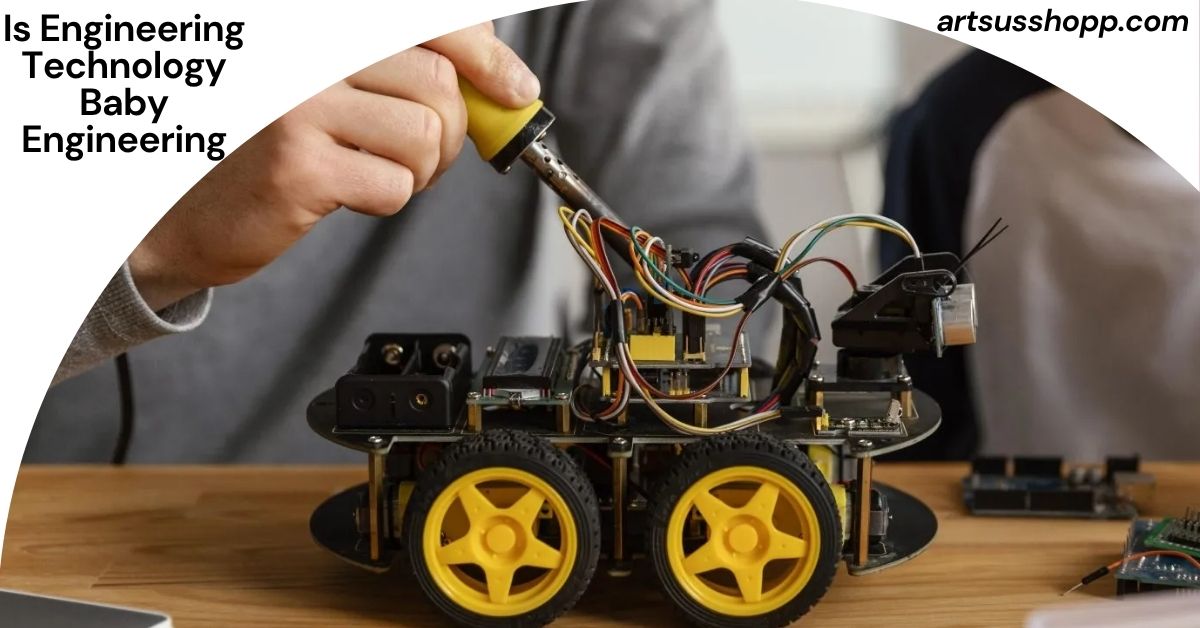
Is Engineering Technology Baby Engineering? A Complete Guide to the Real Difference
The phrase “is engineering technology baby engineering” has become popular online, especially among students who are deciding between engineering and engineering technology degrees. Some people use this phrase as a joke. Others use it to criticize engineering technology programs. But is the statement actually true?
The short answer is no.
Engineering technology is not “baby engineering.” It is a different educational path designed for different career goals, learning styles, and industry needs. Both engineering and engineering technology are important fields. Both help create products, systems, machines, and solutions that people use every day.
The confusion happens because the two fields sound very similar. They also share many classes in math, science, electronics, mechanics, manufacturing, computer systems, and design. However, the main difference is how students apply that knowledge.
Engineering programs focus more on theory, advanced mathematics, research, and system design. Engineering technology programs focus more on practical application, implementation, testing, troubleshooting, operations, and hands-on work.
In today’s modern workforce, companies need both engineers and engineering technologists. Without engineers, new ideas may never be designed. Without engineering technologists, many systems would never work properly in the real world.
What Is Engineering Technology?
Engineering technology is a professional field focused on applying engineering principles in practical situations. It combines technical knowledge with hands-on skills to solve real-world problems.
Engineering technology graduates often work with:
- Machines
- Manufacturing systems
- Electronics
- Construction systems
- Industrial processes
- Computer systems
- Robotics
- Automation equipment
- Testing tools
- Production operations
Unlike traditional engineering programs, engineering technology programs usually spend less time on advanced theory and more time on practical application.
For example:
- Engineering students may spend more time proving formulas and studying advanced physics theories.
- Engineering technology students may spend more time operating equipment, building systems, troubleshooting problems, and applying designs.
This does not make engineering technology “less important.” It simply means the learning style is different.

Many engineering technology programs include:
- Laboratory work
- Technical projects
- Industry simulations
- Applied design work
- Equipment training
- Team-based assignments
- Real-world troubleshooting
Engineering technology graduates often become:
- Engineering technologists
- Field engineers
- Manufacturing specialists
- CAD designers
- Quality control specialists
- Process technicians
- Systems operators
- Project coordinators
- Industrial managers
- Automation specialists
The field plays a major role in industries across the United States.
Why Do People Say “Is Engineering Technology Baby Engineering”?
The phrase “is engineering technology baby engineering” usually comes from misunderstandings.
Some engineering students believe engineering technology programs are easier because they involve:
- Less advanced calculus
- Less theoretical physics
- More hands-on learning
- Fewer abstract mathematical proofs
Because of this, some people wrongly assume engineering technology is a “lighter” version of engineering.
However, this comparison is unfair and inaccurate.
Engineering technology students still study:
- Mathematics
- Physics
- Electronics
- Computer systems
- Manufacturing
- Mechanical systems
- Technical problem-solving
- Engineering concepts
The difference is the focus.
Engineering students often focus on creating new systems from theoretical foundations.
Engineering technology students often focus on implementing, operating, improving, and maintaining those systems.
A simple example can help explain the difference.
Imagine a company building a new automated factory.
The engineer may:
- Design the automation system
- Perform advanced calculations
- Develop technical specifications
- Create system models
- Analyze performance data
The engineering technologist may:
- Install the equipment
- Test the system
- Troubleshoot problems
- Operate machinery
- Improve production efficiency
- Maintain the automation systems
Both jobs are essential.
Without engineers, the system may never be designed.
Without engineering technologists, the system may never successfully operate.
Engineering vs Engineering Technology: The Core Difference
The biggest difference between engineering and engineering technology is the balance between theory and application.
Engineering
Engineering programs focus heavily on:
- Advanced mathematics
- Scientific theory
- Research
- System design
- Innovation
- Analytical modeling
- Concept development
Engineering students often study:
- Calculus III
- Differential equations
- Advanced physics
- Thermodynamics
- Fluid dynamics
- Advanced circuit analysis
- Computational modeling
Engineers often work in:
- Research and development
- Product design
- System architecture
- Advanced technical analysis
- Innovation projects
Engineering Technology
Engineering technology programs focus more on:
- Applied engineering
- Practical problem-solving
- Equipment operation
- Technical implementation
- System testing
- Maintenance
- Manufacturing processes
Engineering technology students often study:
Also Read: How to Get Technology Points Palworld: The Ultimate Guide for Fast Progress
- Applied mathematics
- Technical drafting
- Industrial systems
- CAD software
- Manufacturing methods
- Automation systems
- Technical troubleshooting
Engineering technologists often work in:
- Manufacturing
- Production
- Field operations
- Technical support
- Quality control
- Systems management
- Equipment maintenance
Neither path is automatically better.
They simply prepare students for different roles.
Is Engineering Technology Easier Than Engineering?
This is one of the most common questions online.
The answer depends on the student.
Traditional engineering programs are usually more mathematically intense. Students spend more time on:
- Advanced calculus
- Theoretical physics
- Complex equations
- Analytical problem-solving
- Scientific modeling
Engineering technology programs are usually more application-focused. Students spend more time on:
- Labs
- Equipment
- Technical projects
- Practical troubleshooting
- System operations
For students who enjoy hands-on learning, engineering technology may actually feel easier and more enjoyable.
For students who enjoy abstract mathematics and theory, traditional engineering may feel more natural.
Difficulty is personal.
Some students struggle with advanced theoretical math.
Others struggle with practical technical work.
One path is not automatically “smarter” than the other.
Is Engineering Technology a Good Degree?
Yes.
Engineering technology can be an excellent degree choice, especially for students who prefer practical learning and technical problem-solving.
The United States continues to need skilled technical professionals in many industries, including:
- Manufacturing
- Robotics
- Aerospace
- Construction
- Energy
- Automation
- Electronics
- Automotive systems
- Computer networking
- Industrial operations
Engineering technology graduates often find strong job opportunities because many companies need workers who can:
- Apply technical knowledge
- Solve operational problems
- Work with machinery
- Improve efficiency
- Manage systems
- Support production
Modern industries rely heavily on technical professionals who can bridge the gap between theory and practical implementation.
That is exactly where engineering technologists often excel.
Careers in Engineering Technology
Many students asking “is engineering technology baby engineering” are really worried about career opportunities.
The good news is that engineering technology graduates can work in many well-paying industries.
Popular Engineering Technology Careers
Mechanical Engineering Technologist
These professionals work with:
- Machines
- Manufacturing systems
- Mechanical equipment
- Industrial production
- Robotics
They may help test, improve, and maintain mechanical systems.
Electrical Engineering Technologist
These specialists work with:
- Electrical systems
- Power systems
- Electronics
- Communication equipment
- Automation controls
They often help install and troubleshoot electrical equipment.
Industrial Engineering Technologist
These professionals improve:
- Production systems
- Manufacturing efficiency
- Supply chain operations
- Workplace safety
- Industrial processes
Civil Engineering Technologist
These specialists assist with:
- Construction projects
- Infrastructure systems
- Road projects
- Structural inspections
- Surveying work
Manufacturing Technologist
These professionals help manage:
- Factory systems
- Production equipment
- Automation technology
- Quality control
- Industrial machinery
Automation and Robotics Specialist
These workers help operate and maintain:
- Robotic systems
- Smart manufacturing systems
- Automated production lines
- Industrial control systems
Engineering Technology Salary in the United States
Salary depends on:
- Industry
- Experience
- Location
- Certifications
- Education level
- Technical skills
However, many engineering technology graduates earn competitive salaries.
Average Salary Ranges
Typical salary ranges in the United States may include:
- Engineering technologists: $60,000 to $100,000+
- Electrical technologists: $70,000 to $110,000+
- Industrial technologists: $65,000 to $105,000+
- Manufacturing specialists: $60,000 to $95,000+
- Automation specialists: $75,000 to $120,000+
High-demand industries such as robotics, aerospace, semiconductor manufacturing, and automation may offer even higher salaries.
Many professionals also increase their income through:
- Certifications
- Experience
- Leadership roles
- Specialized technical skills
Can Engineering Technology Graduates Become Engineers?
In some situations, yes.
This depends on:
- State licensing laws
- Employer requirements
- Degree accreditation
- Work experience
- Additional education
Some engineering technology graduates later:
- Earn engineering licenses
- Complete advanced degrees
- Move into engineering roles
- Become project managers
- Work in system design
However, some employers prefer traditional engineering degrees for specific engineering positions.
That is why students should carefully research career goals before choosing a degree.
ABET Accreditation Matters
One of the most important things students should check is accreditation.
In the United States, ABET accreditation is highly respected.
ABET evaluates engineering and engineering technology programs to ensure quality education standards.
Choosing an ABET-accredited program can help students:
- Improve job opportunities
- Qualify for certifications
- Meet licensing requirements
- Gain employer trust
- Transfer credits more easily
Not all engineering technology programs are equal.
Accreditation can make a major difference.
Common Myths About Engineering Technology
Engineering Technology Is Baby Engineering
This is false.
Engineering technology is a professional technical field with its own career paths, skills, and value.
The educational focus is different, but the field is still important and respected.
Engineering Technology Graduates Cannot Get Good Jobs
This is also false.
Many engineering technology graduates work in:
- Aerospace
- Manufacturing
- Automotive industries
- Energy systems
- Robotics
- Electronics
- Construction
- Industrial automation
Many earn strong salaries and advance into leadership positions.
Engineering Technology Degrees Are Useless
This is incorrect.
Modern industries depend heavily on technical professionals who understand practical implementation.
Engineering technology graduates help keep systems running efficiently.
Engineering Technology Is Only for Weak Math Students
While engineering technology programs may involve less advanced theoretical math, students still need strong technical problem-solving abilities.
Many courses remain challenging.
Students still study:
- Algebra
- Trigonometry
- Applied calculus
- Physics
- Electronics
- Technical systems
Engineers Always Earn More
Not always.
Salary depends heavily on:
- Industry demand
- Technical specialization
- Experience
- Location
- Leadership skills
- Certifications
Some engineering technology professionals earn more than engineers in certain industries.
Which Is Better: Engineering or Engineering Technology?
There is no universal answer.
The better choice depends on the student.
Engineering May Be Better If You:
- Love advanced mathematics
- Enjoy theoretical problem-solving
- Want to work in research
- Want to design complex systems
- Enjoy scientific analysis
- Plan to pursue advanced engineering licenses
Engineering Technology May Be Better If You:
- Prefer hands-on learning
- Enjoy practical work
- Like troubleshooting systems
- Want faster entry into technical industries
- Enjoy working with equipment
- Prefer applied technical problem-solving
Success depends more on:
- Motivation
- Work ethic
- Skill development
- Communication skills
- Industry experience
A motivated engineering technology graduate can build an excellent career.
The Growing Demand for Engineering Technology Professionals
Technology continues to grow rapidly in the United States.
Industries increasingly rely on:
- Automation
- Robotics
- Smart manufacturing
- Artificial intelligence systems
- Renewable energy systems
- Advanced electronics
- Industrial data systems
As these systems become more complex, companies need professionals who can:
- Install systems
- Operate equipment
- Maintain technology
- Improve efficiency
- Troubleshoot failures
- Support production systems
Engineering technology professionals often fill these important roles.
Many industries currently face technical labor shortages.
This creates strong opportunities for graduates with practical technical skills.
Engineering Technology in Modern Manufacturing
Modern manufacturing has changed dramatically.
Factories today use:
- Robotics
- Sensors
- Smart machines
- Computer-controlled systems
- Automation software
- Industrial networks
Engineering technology professionals help manage these advanced systems.
Also Read: How Exactly Does Blockchain Technology Work in Simple Terms? A Beginner-Friendly Guide for 2026
In many facilities, they are responsible for:
- System maintenance
- Production optimization
- Technical troubleshooting
- Equipment upgrades
- Process improvements
- Safety systems
Without skilled technical professionals, modern manufacturing systems would struggle to operate efficiently.
The Role of Soft Skills in Engineering Technology
Technical skills matter, but soft skills are also extremely important.
Successful engineering technology professionals often have strong:
- Communication skills
- Teamwork abilities
- Leadership skills
- Problem-solving abilities
- Time management
- Technical writing skills
Many professionals work closely with:
- Engineers
- Managers
- Technicians
- Operators
- Customers
- Vendors
The ability to communicate clearly can strongly impact career growth.
Is Engineering Technology Respected?
Yes.
Most employers understand the difference between engineering and engineering technology.
Companies hire engineering technology graduates because they need employees with practical technical skills.
In many industries, engineering technologists are highly respected because they can:
- Solve real-world problems
- Work directly with systems
- Improve operations
- Support production
- Troubleshoot equipment
- Keep projects moving
The negative stereotypes usually come from internet arguments and misunderstandings.
In real workplaces, companies care more about:
- Skills
- Experience
- Performance
- Reliability
- Problem-solving ability
Real-World Example: Engineers and Engineering Technologists Working Together
Imagine a company building a new electric vehicle manufacturing plant.
The engineering team may:
- Design robotic systems
- Create electrical layouts
- Analyze production requirements
- Develop automation strategies
- Design machine systems
The engineering technology team may:
- Install production equipment
- Test robotic systems
- Troubleshoot automation problems
- Maintain factory systems
- Improve production efficiency
- Monitor operations
The project needs both groups.
One group focuses more on design and analysis.
The other focuses more on implementation and operation.
Neither role is “baby” work.
Both are professional careers with major responsibilities.
Can Engineering Technology Lead to Management Roles?
Absolutely.
Many engineering technology graduates eventually move into:
- Project management
- Production management
- Operations leadership
- Technical supervision
- Industrial management
- Plant leadership
Hands-on experience can sometimes provide strong preparation for leadership positions.
Professionals who understand how systems work in real environments can become valuable managers.
Online Opinions vs Reality
Online discussions about “is engineering technology baby engineering” are often emotional and inaccurate.
Students sometimes compare degrees to feel superior.
However, real employers focus on results.
Companies want workers who can:
- Solve problems
- Improve efficiency
- Communicate effectively
- Work safely
- Adapt to technology
- Support operations
Many successful professionals come from engineering technology backgrounds.
Career success depends more on:
- Experience
- Networking
- Internships
- Certifications
- Work ethic
- Technical growth
A degree alone does not determine success.
How to Choose Between Engineering and Engineering Technology
Students should ask themselves important questions.
Do You Prefer Theory or Application?
If you enjoy:
- Equations
- Scientific theory
- Mathematical analysis
- Advanced problem-solving
Traditional engineering may fit better.
If you enjoy:
- Hands-on projects
- Technical systems
- Equipment
- Troubleshooting
- Applied learning
Engineering technology may fit better.
What Type of Career Do You Want?
Some careers strongly prefer traditional engineering degrees.
Others highly value practical technical experience.
Research your career goals before choosing.
What Type of Learning Style Fits You?
Students learn differently.
Some thrive in theoretical academic environments.
Others perform better with practical application.
Choosing the right fit can improve:
- Academic success
- Career satisfaction
- Confidence
- Motivation
Future Outlook for Engineering Technology
The future looks strong for many engineering technology careers.
The United States continues investing in:
- Infrastructure
- Manufacturing
- Clean energy
- Robotics
- Automation
- Semiconductor production
- Transportation systems
These industries need skilled technical professionals.
As technology grows more advanced, the need for workers who can operate and maintain complex systems will likely continue increasing.
Engineering technology graduates may find opportunities in:
- Smart factories
- Renewable energy systems
- Electric vehicle manufacturing
- Aerospace systems
- Industrial robotics
- AI-supported automation
Technical careers are evolving quickly.
Professionals who continue learning and adapting can build long-term career success.
The Truth About the Phrase “Is Engineering Technology Baby Engineering”
The phrase is mostly based on misunderstanding.
Engineering technology is not a “baby” version of engineering.
It is a separate professional pathway focused on practical engineering application.
The two fields overlap, but they serve different purposes.
Traditional engineers often focus more on:
- Theory
- Design
- Research
- Analysis
Engineering technologists often focus more on:
- Application
- Implementation
- Operations
- Troubleshooting
Modern industries need both.
Without engineering innovation, new systems would not exist.
Without practical technical professionals, many systems would fail in real-world operation.
Both careers contribute to:
- Technology growth
- Manufacturing
- Infrastructure
- Automation
- Energy systems
- Industrial progress
The idea that engineering technology is inferior is outdated.
Today’s industries increasingly value practical technical expertise.
Final Thoughts
So, is engineering technology baby engineering?
No.
Engineering technology is a respected professional field focused on applied engineering and practical technical solutions.
While engineering and engineering technology share similarities, they prepare students for different types of work.
Engineering focuses more on advanced theory, mathematical analysis, and system design.
Engineering technology focuses more on implementation, operation, troubleshooting, and practical application.
Neither path guarantees success.
Neither path automatically makes someone smarter.
Career success depends on:
- Skills
- Experience
- Continuous learning
- Communication
- Work ethic
- Industry demand
Students should choose the path that best matches their:
- Interests
- Strengths
- Career goals
- Learning style
The most important thing is building real expertise and continuing to grow professionally.
In today’s technology-driven world, both engineers and engineering technologists play critical roles.
Frequently Asked Questions
Is engineering technology the same as engineering?
No.
Engineering focuses more on theory, advanced mathematics, and design.
Engineering technology focuses more on practical application and hands-on technical work.
Is engineering technology easier than engineering?
It depends on the student.
Engineering usually involves more advanced theoretical mathematics. Engineering technology usually focuses more on applied technical skills and practical problem-solving.
Can engineering technology graduates become engineers?
In some cases, yes.
This depends on employer requirements, licensing laws, accreditation, experience, and additional education.
Is engineering technology respected by employers?
Yes.
Many employers value engineering technology graduates because they have practical technical skills and hands-on experience.
Do engineering technology graduates earn good salaries?
Yes.
Many engineering technology professionals earn competitive salaries, especially in automation, manufacturing, robotics, aerospace, and industrial systems.
Is engineering technology a good career in the future?
Yes.
Industries increasingly need professionals who can operate, maintain, troubleshoot, and improve advanced technical systems.
Should I choose engineering or engineering technology?
Choose the path that best matches your interests and career goals.
If you enjoy theory and advanced mathematics, engineering may fit better.
If you prefer practical application and hands-on learning, engineering technology may fit better.
What industries hire engineering technology graduates?
Common industries include:
- Manufacturing
- Aerospace
- Automotive
- Construction
- Robotics
- Electronics
- Energy
- Industrial automation
- Telecommunications
Can engineering technologists move into management?
Yes.
Many engineering technology graduates become project managers, operations managers, production supervisors, and technical leaders.
Is engineering technology worth it in 2026 and beyond?
For many students, yes.
Technology-driven industries continue growing, and companies need skilled technical professionals who can support real-world operations and advanced systems.


