



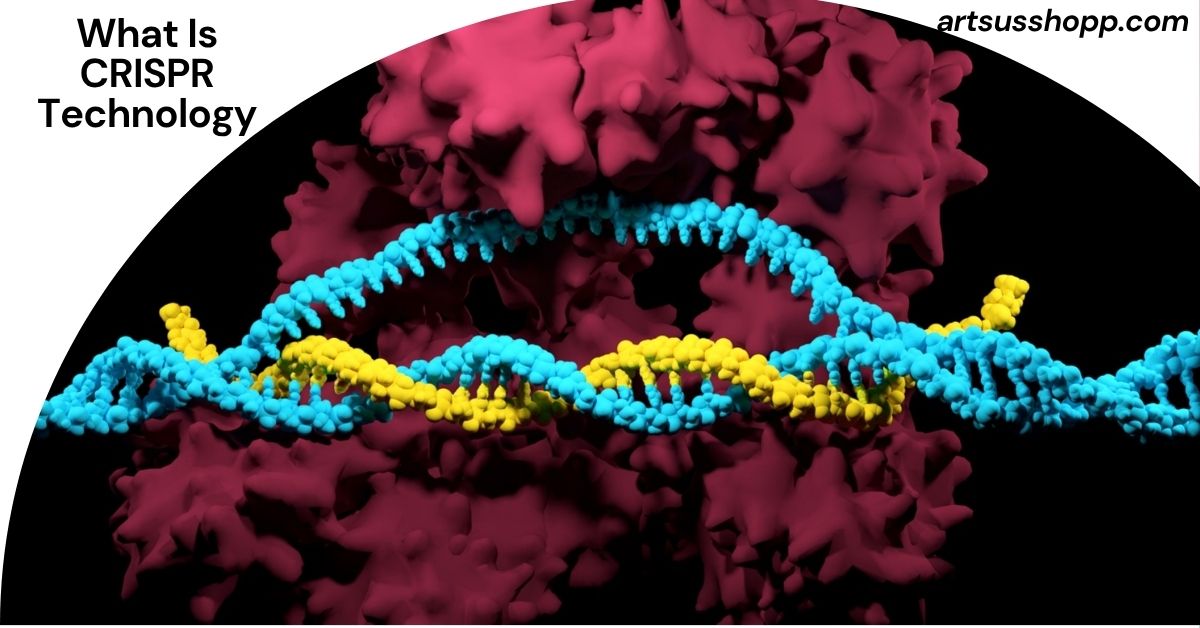
What Is CRISPR Technology? A Complete Beginner’s Guide to Gene Editing in 2026
Modern science has achieved many breakthroughs, but few discoveries have changed biology as dramatically as CRISPR. Scientists now have the ability to edit genes with a level of precision that was once impossible. This technology is helping researchers develop treatments for genetic diseases, improve agriculture, fight infections, and explore new possibilities in medicine.
Many people have heard the term CRISPR but still ask, what is CRISPR technology and why is it considered revolutionary?
In simple terms, CRISPR is a powerful gene-editing tool that allows scientists to find, remove, replace, or modify specific sections of DNA. Because DNA contains the instructions that control how living organisms grow and function, the ability to edit DNA opens the door to solving many biological and medical challenges.
This guide explains what is CRISPR technology, how it works, its benefits, limitations, applications, ethical concerns, and what the future may hold. Whether you are a student, researcher, healthcare professional, or simply curious about science, this article will help you understand CRISPR in an easy-to-read format.
What Is CRISPR Technology?
To understand what is CRISPR technology, it helps to know that CRISPR stands for “Clustered Regularly Interspaced Short Palindromic Repeats.”
These are special DNA sequences naturally found in bacteria. Scientists discovered that bacteria use CRISPR as part of an immune defense system to protect themselves from viruses.
When a virus attacks a bacterium, the bacterium stores small pieces of the virus’s genetic material in its own DNA. If the same virus attacks again, the bacterium recognizes it and uses CRISPR-associated proteins to destroy the viral DNA.
Researchers realized they could adapt this natural defense system into a gene-editing tool. Today, CRISPR allows scientists to make precise changes to DNA in plants, animals, and humans.
In simple language, CRISPR acts like molecular scissors that can cut DNA at a chosen location, allowing scientists to remove, add, or modify genetic information.
What Is CRISPR Gene Editing Technology?
Many people specifically ask, what is CRISPR gene editing technology?
CRISPR gene editing technology refers to the use of CRISPR systems to modify an organism’s DNA. Scientists can target a specific gene and make changes with remarkable accuracy.
Gene editing can be used to:
- Correct disease-causing mutations
- Remove harmful genes
- Insert beneficial genes
- Study how genes work
- Develop new medical treatments
- Improve crop quality
Traditional genetic engineering methods were often slower, more expensive, and less precise. CRISPR transformed the field because it is faster, easier to use, and significantly more accurate.
This is one reason why CRISPR gene editing technology is considered one of the most important scientific innovations of the 21st century.
The Discovery of CRISPR
The journey of CRISPR began in 1987 when Japanese researchers first noticed unusual repeating DNA sequences in bacteria.
For years, scientists did not understand their purpose.
In the early 2000s, researchers discovered that these sequences were part of a bacterial immune system. Later, scientists including Jennifer Doudna and Emmanuelle Charpentier demonstrated how CRISPR could be adapted for precise gene editing.
Their groundbreaking work transformed biotechnology and earned them the Nobel Prize in Chemistry in 2020.
Since then, CRISPR research has expanded rapidly across medicine, agriculture, biotechnology, and environmental science.
What Is CRISPR Cas Technology?
Another common question is, what is CRISPR Cas technology?
CRISPR Cas technology refers to the combination of CRISPR DNA sequences and Cas proteins that work together to edit genes.
The word “Cas” means CRISPR-associated proteins.
These proteins act like molecular tools that can cut DNA at specific locations.
The CRISPR system provides the directions, while the Cas protein performs the actual cutting.
Think of it this way:
- CRISPR is the GPS.
- Cas is the scissors.
Together, they allow scientists to target and edit specific genes with high precision.
Different Cas proteins exist, and researchers continue discovering new versions with unique capabilities.
What Is CRISPR Cas9 Technology?
One of the most popular forms of CRISPR is CRISPR-Cas9.
So, what is CRISPR Cas9 technology?
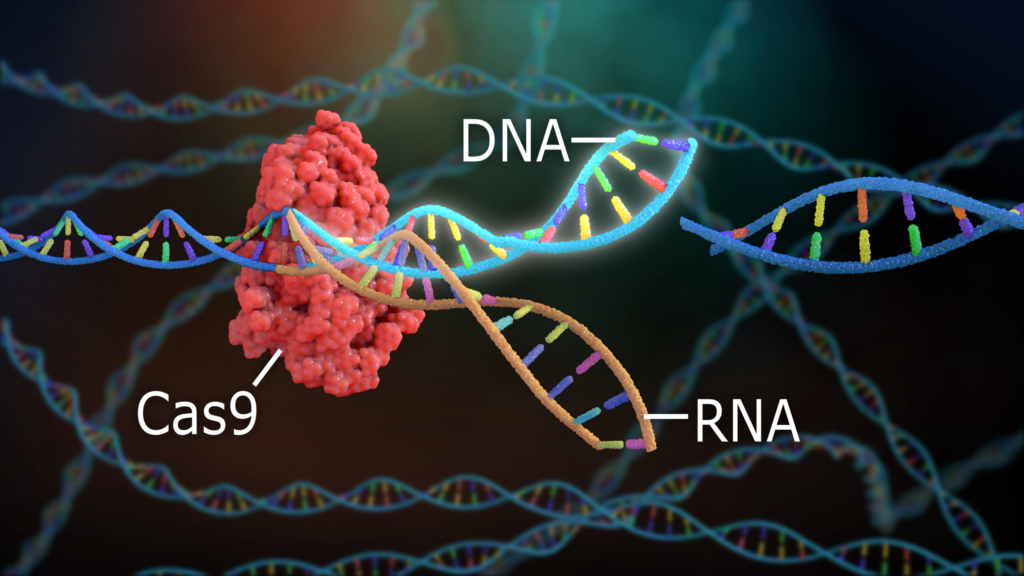
CRISPR-Cas9 technology uses a protein called Cas9 to cut DNA at a specific location identified by a guide RNA.
The process works like this:
- Scientists create a guide RNA.
- The guide RNA matches the DNA sequence they want to edit.
- The guide RNA directs Cas9 to the target location.
- Cas9 cuts the DNA.
- The cell repairs the DNA.
- During repair, scientists can add, remove, or replace genetic material.
Because Cas9 can be programmed to target almost any gene, it became the most widely used gene-editing tool in the world.
What Is CRISPR Gene Technology?
The term CRISPR gene technology broadly refers to all technologies that use CRISPR systems to manipulate genetic material.
This includes:
- Gene editing
- Gene activation
- Gene suppression
- Disease research
- Genetic diagnostics
- Agricultural improvements
CRISPR gene technology is not limited to cutting DNA. New versions can also turn genes on or off without changing the DNA sequence itself.
This flexibility makes CRISPR one of the most versatile tools in modern biology.
How CRISPR Technology Works
Understanding how CRISPR works is easier than many people think.
The process can be divided into three main steps.
Step 1: Identifying the Target Gene
Scientists first determine which DNA sequence they want to modify.
This may be a gene linked to a disease or a trait they wish to improve.
Step 2: Creating a Guide RNA
A guide RNA is designed to match the target DNA sequence.
This guide RNA acts like an address label directing the CRISPR system to the correct location.
Step 3: Cutting and Editing DNA
The Cas protein follows the guide RNA to the target DNA.
Once it arrives, the Cas protein cuts the DNA.
The cell naturally repairs the break.
During this repair process, scientists can introduce desired genetic changes.
The result is a precise modification of the organism’s genetic code.
Why CRISPR Is Considered Revolutionary
Several factors make CRISPR unique compared to older genetic engineering methods.
High Precision
Scientists can target specific DNA sequences with exceptional accuracy.
Lower Cost
CRISPR is significantly cheaper than many earlier gene-editing techniques.
Faster Results
Experiments that once took years can now be completed much more quickly.
Wide Range of Applications
CRISPR can be used in medicine, agriculture, environmental science, and biotechnology.
Ease of Use
Researchers around the world can implement CRISPR more easily than previous technologies.
These advantages have accelerated scientific discoveries across many fields.
Medical Applications of CRISPR Technology
Medicine is one of the most exciting areas for CRISPR.
Treating Genetic Disorders
Many diseases are caused by mutations in a single gene.
Examples include:
- Sickle cell disease
- Cystic fibrosis
- Muscular dystrophy
- Huntington’s disease
CRISPR offers the possibility of correcting these mutations directly.
Cancer Treatment
Researchers are developing CRISPR-based therapies that help immune cells identify and attack cancer cells more effectively.
This could improve treatment outcomes while reducing side effects.
Blood Disorders
CRISPR has already shown success in treating certain inherited blood diseases.
Patients with severe genetic blood disorders have experienced significant improvements after receiving CRISPR-based treatments.
Rare Diseases
Thousands of rare diseases have genetic causes.
CRISPR may eventually provide personalized treatment options for many of these conditions.
Infectious Diseases
Researchers are exploring CRISPR’s ability to fight viruses and bacterial infections by targeting harmful genetic material.
CRISPR and Personalized Medicine
Healthcare is moving toward personalized treatment.
Instead of using the same therapy for every patient, doctors aim to tailor treatments based on individual genetics.
CRISPR supports this goal by enabling highly customized interventions.
Future treatments may be designed specifically for a person’s unique genetic profile, improving effectiveness and reducing unwanted side effects.
CRISPR Technology in Agriculture
Agriculture is another field benefiting from CRISPR.
Improved Crop Yield
Scientists can develop crops that produce more food.
Disease Resistance
Plants can be engineered to resist fungal, bacterial, and viral infections.
Drought Tolerance
CRISPR can help crops survive with less water.
Better Nutrition
Researchers can enhance nutritional content in fruits, vegetables, and grains.
Reduced Chemical Use
Disease-resistant crops may require fewer pesticides, benefiting both farmers and the environment.
These improvements may help address future global food security challenges.
CRISPR and Animal Research
CRISPR is also transforming animal science.
Researchers use gene editing to:
- Study diseases
- Improve livestock health
- Develop disease-resistant animals
- Advance medical research
Animal models created using CRISPR help scientists better understand human diseases and test potential treatments.
Environmental Applications of CRISPR
Environmental scientists are exploring innovative ways to use CRISPR.
Potential applications include:
- Protecting endangered species
- Controlling invasive species
- Restoring ecosystems
- Reducing agricultural pollution
- Fighting disease-carrying insects
These projects are still being carefully studied due to potential ecological risks.
Recent CRISPR Developments in 2025 and 2026
CRISPR technology continues to evolve rapidly.
Recent advancements include:
Improved Editing Accuracy
New CRISPR systems reduce unintended genetic changes, making treatments safer.
Base Editing
Scientists can now change individual DNA letters without cutting the entire DNA strand.
Prime Editing
Prime editing offers even greater precision by allowing targeted DNA corrections with fewer unwanted effects.
Expanded Clinical Trials
Researchers continue testing CRISPR therapies for additional diseases and conditions.
Better Delivery Systems
Scientists are developing safer and more effective ways to deliver CRISPR treatments into cells.
These innovations are bringing gene-editing therapies closer to mainstream medical use.
Benefits of CRISPR Technology
CRISPR provides numerous advantages.
Precision
Targeted editing reduces unintended changes.
Speed
Research progresses faster than with traditional methods.
Accessibility
More laboratories can use CRISPR due to lower costs.
Flexibility
Applicable across multiple scientific fields.
Medical Potential
May provide cures for previously untreatable diseases.
Agricultural Benefits
Supports sustainable food production.
These strengths explain why CRISPR remains one of the most influential scientific tools available today.
Risks and Challenges of CRISPR
Despite its promise, CRISPR is not perfect.
Off-Target Effects
Sometimes edits occur in unintended locations.
Delivery Challenges
Getting CRISPR into specific cells remains difficult in some cases.
Long-Term Safety
Scientists continue studying potential long-term effects.
Ethical Concerns
Gene editing raises important questions about how the technology should be used.
Regulatory Issues
Governments worldwide are developing regulations to ensure responsible use.
Addressing these challenges is essential for the safe advancement of CRISPR technology.
Ethical Questions Surrounding CRISPR
The power to edit genes raises significant ethical discussions.
Some questions include:
- Should scientists edit human embryos?
- How should genetic enhancements be regulated?
- Who should have access to gene-editing treatments?
- Could CRISPR increase social inequality?
- How can misuse be prevented?
Most experts support using CRISPR for treating serious diseases while encouraging careful oversight of more controversial applications.
The Future of CRISPR Technology
The future of CRISPR looks incredibly promising.
Researchers believe gene editing may eventually help:
- Cure inherited diseases
- Prevent genetic disorders before birth
- Create more sustainable agriculture
- Develop personalized cancer therapies
- Improve organ transplantation
- Advance regenerative medicine
While challenges remain, the pace of innovation suggests CRISPR will continue reshaping healthcare and biotechnology for decades.
Expert Analysis: Why CRISPR Matters More Than Ever
When examining what is CRISPR technology, it becomes clear that its significance goes beyond gene editing alone.
CRISPR represents a shift in how humanity approaches biological problems.
For centuries, medicine largely focused on treating symptoms. CRISPR introduces the possibility of addressing diseases at their genetic source.
Similarly, agriculture has traditionally relied on selective breeding over many generations. CRISPR allows improvements to occur much more efficiently while maintaining precision.
The true impact of CRISPR may not be measured by a single breakthrough but by the thousands of discoveries it enables across different scientific disciplines.
Also Read: What Is 5G Technology? A Complete Guide to How 5G Works, Benefits, Features, and Future Applications
Its greatest value lies in giving researchers unprecedented control over genetic information while opening opportunities that were once considered impossible.
Conclusion
Understanding what is CRISPR technology is essential because it represents one of the most transformative scientific innovations of modern times.
From treating genetic diseases and improving agriculture to advancing environmental conservation and personalized medicine, CRISPR has already begun changing the world.
The technology continues to evolve through innovations such as CRISPR-Cas9, base editing, and prime editing. While ethical and safety considerations remain important, the potential benefits are extraordinary.
As research advances, CRISPR may help solve some of humanity’s biggest challenges, making it one of the most important scientific developments of the 21st century.
Frequently Asked Questions (FAQs)
Is CRISPR technology available to patients today?
Yes. Certain CRISPR-based treatments have reached clinical use for specific genetic disorders, while many additional therapies remain in clinical trials.
How accurate is CRISPR gene editing?
Modern CRISPR systems are highly accurate, and newer techniques such as base editing and prime editing have improved precision even further.
Can CRISPR completely cure genetic diseases?
In some cases, CRISPR has the potential to correct disease-causing mutations. However, outcomes depend on the specific disease, treatment approach, and patient factors.
What industries use CRISPR technology?
Healthcare, biotechnology, pharmaceuticals, agriculture, environmental science, food production, and academic research all use CRISPR technology.
Is CRISPR different from traditional genetic engineering?
Yes. CRISPR is generally more precise, faster, easier to use, and less expensive than many traditional genetic engineering methods.
Can CRISPR be used to edit plants?
Yes. Scientists use CRISPR extensively to improve crop yield, disease resistance, drought tolerance, and nutritional quality.
Does CRISPR only work with human DNA?
No. CRISPR can edit DNA in plants, animals, bacteria, fungi, and many other organisms.
What is the difference between CRISPR-Cas9 and prime editing?
CRISPR-Cas9 cuts DNA to make changes, while prime editing offers a more precise approach that can make targeted corrections with fewer unwanted edits.
Will CRISPR become common in healthcare?
Many experts believe CRISPR-based therapies will become increasingly common as safety, effectiveness, and delivery methods continue to improve.
Could CRISPR help prevent future diseases?
Potentially yes. Researchers are investigating ways to use CRISPR to identify, correct, or reduce genetic risks before diseases develop.


