



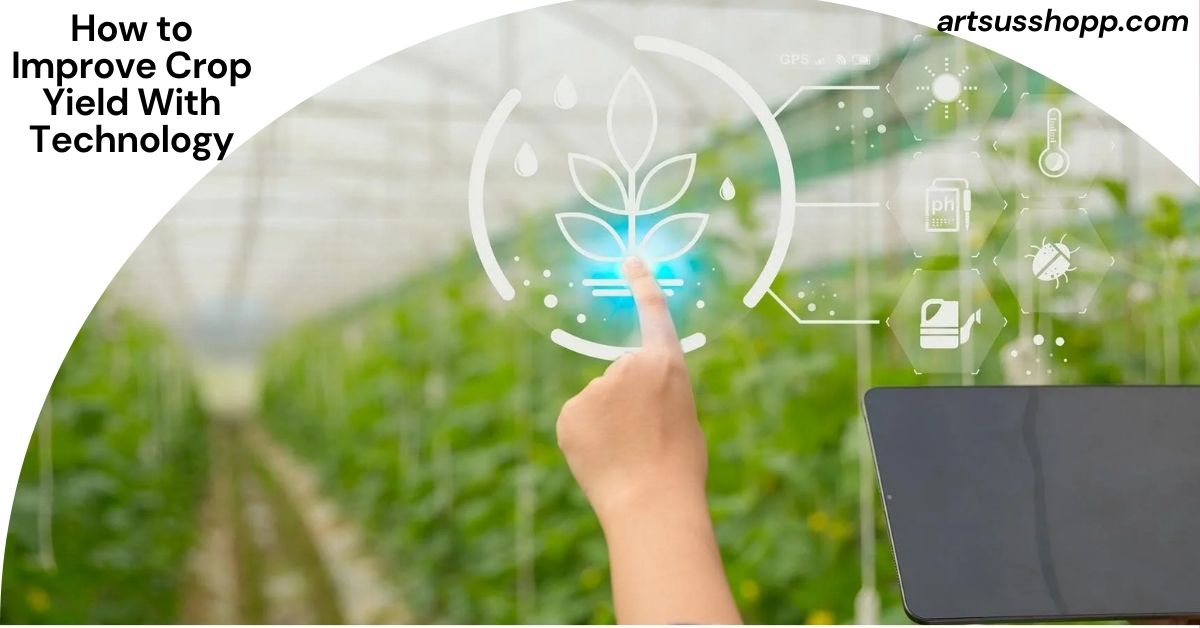
How to Improve Crop Yield With Technology: The Complete Guide for Modern Farming
Farming has changed more in the last 20 years than in the previous 100 years. Today, technology helps farmers grow more food, save water, reduce waste, and earn higher profits. From smart irrigation systems to drones and artificial intelligence, modern tools are helping agriculture become faster, smarter, and more productive.
Whether you are a small farmer, commercial grower, agriculture student, or agribusiness owner in the United States, this article will help you understand how technology is transforming farming and increasing crop production.
Technology is no longer optional in agriculture. Farmers who adopt modern tools often produce healthier crops, reduce labor costs, and improve overall farm efficiency. At the same time, consumers demand better-quality food, and climate change creates new challenges for growers. Smart farming solutions can help solve these problems.
This article covers the best technologies for increasing crop yield, how they work, their benefits, common mistakes to avoid, and future trends in agriculture.
What Does Crop Yield Mean?
Crop yield refers to the amount of crops produced from a specific area of land. It is usually measured in bushels, tons, or pounds per acre.
Higher crop yield means:
- More food production
- Better farm profits
- Improved land efficiency
- Lower production costs per unit
- Stronger food security
Farmers always try to increase crop yield while keeping costs low and protecting soil health.
Why Technology Is Important in Modern Agriculture
Traditional farming methods still work, but they often waste water, fertilizer, labor, and time. Technology allows farmers to make better decisions using real-time data and automation.
Modern agricultural technology helps farmers:
- Monitor soil conditions
- Predict weather changes
- Detect plant diseases early
- Use fertilizers more accurately
- Save fuel and labor
- Improve irrigation efficiency
- Reduce crop loss
- Increase harvest quality
The biggest advantage is precision. Instead of treating an entire field the same way, farmers can manage crops based on exact needs.
How to Improve Crop Yield With Technology
There are many ways technology improves crop production. Below are the most effective and proven methods used in modern agriculture.
Precision Agriculture
Precision agriculture is one of the most powerful technologies in farming today. It uses GPS, sensors, mapping software, and data analysis to manage crops more accurately.
Instead of guessing what crops need, farmers collect real information from the field.
Precision agriculture helps farmers:
- Apply fertilizer only where needed
- Reduce chemical waste
- Improve soil management
- Increase productivity
- Save money
For example, one part of a field may need more nitrogen while another section may need less water. Precision farming tools identify those differences.
Also Read: How Smart Home Technology Will Change Lives: Future of Smart Living
This targeted approach improves crop health and reduces unnecessary costs.
Smart Irrigation Systems
Water management is critical for crop growth. Too much or too little water can damage plants and reduce yields.
Smart irrigation systems use sensors and automation to deliver the right amount of water at the right time.
These systems monitor:
- Soil moisture
- Weather conditions
- Temperature
- Humidity
- Plant water needs
Benefits of smart irrigation include:
- Reduced water waste
- Lower utility costs
- Healthier crops
- Better root development
- Improved drought resistance
Drip irrigation combined with smart sensors is especially effective because it delivers water directly to plant roots.
In areas facing water shortages, smart irrigation is becoming essential.
Soil Sensors and Soil Testing Technology
Healthy soil produces healthy crops. Modern soil technology helps farmers understand exactly what their soil needs.
Soil sensors can measure:
- Moisture levels
- Nutrient content
- pH balance
- Temperature
- Salinity
With this information, farmers can make better decisions about fertilizers and irrigation.
Instead of overusing chemicals, they apply the correct nutrients at the right time. This improves plant growth while protecting the environment.
Advanced soil testing also prevents nutrient deficiencies that reduce yield.
Drones in Agriculture
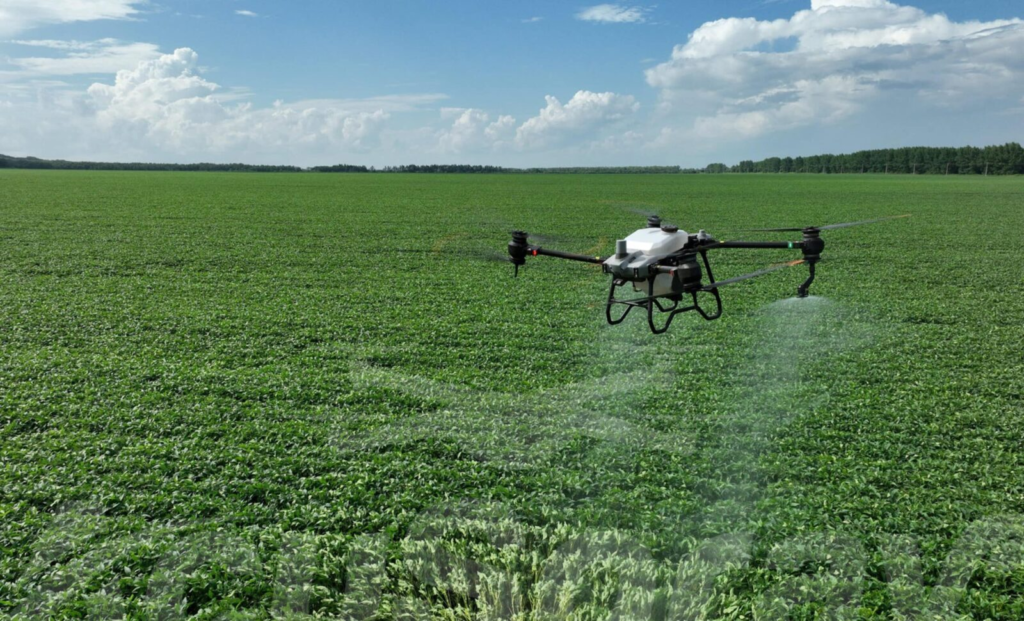
Agricultural drones are becoming more common on farms across the United States.
Drones can fly over fields and collect important information quickly.
Farmers use drones to:
- Monitor crop health
- Detect diseases
- Identify pest problems
- Measure plant growth
- Spray crops
- Analyze field conditions
Drone images provide detailed aerial views that farmers cannot easily see from the ground.
For example, drones can detect stressed plants before visible symptoms appear. Early detection allows farmers to solve problems faster and reduce crop damage.
Drone technology saves time and improves farm management.
Artificial Intelligence in Farming
Artificial intelligence, also called AI, is transforming agriculture.
AI systems analyze large amounts of farm data and provide smart recommendations.
AI helps farmers:
- Predict weather patterns
- Identify crop diseases
- Detect pests
- Optimize planting schedules
- Forecast yields
- Improve irrigation timing
Some AI-powered apps can even identify plant diseases using smartphone photos.
As AI technology improves, farmers can make faster and more accurate decisions.
AI reduces human error and increases farming efficiency.
Machine Learning for Better Crop Management
Machine learning is closely related to artificial intelligence.
It allows farming systems to learn from past data and improve predictions over time.
Machine learning helps with:
- Crop yield forecasting
- Disease prediction
- Soil analysis
- Weed detection
- Harvest planning
For example, machine learning systems can analyze years of weather and soil data to recommend the best planting dates.
This technology helps farmers reduce risks and maximize production.
Internet of Things in Agriculture
The Internet of Things, often called IoT, connects farm equipment and sensors through the internet.
IoT devices continuously collect and share data.
Examples include:
- Smart tractors
- Automated irrigation systems
- Livestock monitoring devices
- Weather stations
- Soil sensors
Farmers can monitor farm conditions from their phones or computers in real time.
This constant data flow improves decision-making and increases efficiency.
IoT farming reduces manual labor and improves productivity.
Automated Farm Equipment
Automation is helping farms operate faster and more efficiently.
Modern farming machines can perform tasks with minimal human involvement.
Examples include:
- Self-driving tractors
- Automated harvesters
- Robotic weeders
- Smart seed planters
- Autonomous sprayers
Automated equipment improves accuracy and reduces labor shortages.
In the United States, labor costs are rising, and many farms struggle to find workers. Automation helps solve this problem.
Robotics also reduce repetitive tasks and improve consistency.
GPS Technology in Agriculture
GPS technology helps farmers manage fields more accurately.
GPS-guided equipment improves:
- Planting precision
- Fertilizer application
- Spraying accuracy
- Harvest efficiency
GPS reduces overlaps and missed areas in fields.
This saves fuel, chemicals, and time.
For example, GPS-guided tractors can plant seeds in perfectly straight rows with high precision.
Better planting often leads to better crop growth and higher yields.
Satellite Imaging for Crop Monitoring
Satellite technology gives farmers detailed information about crop conditions.
Satellite images help monitor:
- Plant health
- Soil moisture
- Crop stress
- Weather impacts
- Field variability
Farmers can identify problems early and respond quickly.
Satellite monitoring is especially useful for large farms because it covers wide areas efficiently.
This technology supports better planning and resource management.
Data Analytics in Agriculture
Data is becoming one of the most valuable tools in farming.
Agricultural software collects and analyzes information from:
- Weather systems
- Soil sensors
- Equipment
- Drones
- Satellites
- Yield monitors
Data analytics helps farmers understand patterns and improve decisions.
For example, farmers can compare yield performance between seasons and identify what practices worked best.
Smart data analysis increases productivity and profitability.
Climate-Smart Farming Technology
Climate change creates serious challenges for agriculture.
Extreme weather, droughts, floods, and heatwaves can reduce crop production.
Climate-smart technology helps farmers adapt.
Examples include:
- Weather forecasting systems
- Drought-resistant seeds
- Smart irrigation
- Soil conservation tools
- Crop monitoring systems
These technologies improve resilience and reduce climate risks.
Farmers who use climate-smart practices are often better prepared for unpredictable conditions.
Biotechnology and Genetically Improved Crops
Biotechnology helps develop stronger and more productive crops.
Modern genetically improved seeds can provide:
- Higher yields
- Disease resistance
- Pest resistance
- Drought tolerance
- Faster growth
Some crops are designed to survive harsh weather conditions or resist common pests.
This reduces crop losses and improves food production.
Biotechnology continues to play a major role in global agriculture.
Hydroponics and Vertical Farming
Hydroponics grows plants without soil using nutrient-rich water.
Vertical farming grows crops in stacked layers indoors.
These methods use advanced technology to control:
- Light
- Temperature
- Water
- Nutrients
- Humidity
Benefits include:
- Faster crop growth
- Reduced water use
- Year-round production
- Less pesticide use
- Higher productivity in small spaces
Urban farming is growing rapidly in the United States because of these technologies.
Also Read: When Was Technology Invented? A Complete History of Human Innovation
Smart Greenhouses
Smart greenhouses use automation and sensors to create ideal growing conditions.
These systems control:
- Temperature
- Lighting
- Irrigation
- Ventilation
- Humidity
Smart greenhouses improve crop quality and reduce environmental stress.
Farmers can grow crops more consistently throughout the year.
This technology is especially useful for vegetables, fruits, and flowers.
Mobile Apps for Farmers
Mobile farming apps provide valuable information directly on smartphones.
Farmers use apps for:
- Weather updates
- Crop management
- Market prices
- Pest identification
- Irrigation scheduling
- Financial planning
Mobile technology makes farming information more accessible and easier to use.
Even small farms can benefit from low-cost agricultural apps.
Blockchain Technology in Agriculture
Blockchain improves transparency in the food supply chain.
It helps track products from farm to consumer.
Benefits include:
- Better food safety
- Improved product tracking
- Reduced fraud
- Stronger consumer trust
Farmers can also receive faster payments and better market access.
Although blockchain is still developing in agriculture, it has strong future potential.
Renewable Energy Technology on Farms
Renewable energy reduces farm operating costs.
Popular options include:
- Solar panels
- Wind turbines
- Biogas systems
Solar-powered irrigation systems are becoming increasingly common.
Renewable energy helps farms become more sustainable and environmentally friendly.
Lower energy costs can also improve farm profits.
Best Crops That Benefit From Agricultural Technology
Almost every crop benefits from technology, but some show especially strong improvements.
These include:
- Corn
- Wheat
- Soybeans
- Rice
- Cotton
- Tomatoes
- Lettuce
- Strawberries
- Potatoes
High-value crops often gain the most from precision farming and smart monitoring systems.
How Small Farmers Can Use Technology
Many people think agricultural technology is only for large farms. That is no longer true.
Affordable solutions are now available for small farmers.
Small farms can start with:
- Mobile farming apps
- Soil testing kits
- Drip irrigation
- Weather monitoring tools
- GPS devices
- Low-cost drones
Starting small is often the best approach.
Farmers can gradually add more technology as profits increase.
Common Mistakes Farmers Make With Technology
Technology can improve crop yield, but poor implementation may reduce benefits.
Common mistakes include:
Buying Expensive Equipment Without Planning
Some farmers invest in costly systems without understanding how to use them properly.
Technology should solve a real problem.
Ignoring Soil Health
Technology cannot replace healthy soil.
Farmers must still focus on organic matter, crop rotation, and soil conservation.
Not Using Data Correctly
Collecting data is not enough.
Farmers must analyze and apply the information effectively.
Overusing Fertilizers and Chemicals
Even advanced systems can fail if farmers misuse chemicals.
Balanced nutrient management is essential.
Failing to Train Workers
Employees need proper training to use modern farming equipment and software.
The Economic Benefits of Agricultural Technology
Technology can significantly improve farm profits.
Benefits include:
- Higher yields
- Lower labor costs
- Reduced waste
- Better crop quality
- Increased efficiency
- Lower water usage
- Reduced fuel costs
Although some technologies require initial investment, long-term savings are often substantial.
Many farmers recover costs through improved productivity.
Environmental Benefits of Smart Farming
Modern agriculture must protect natural resources.
Technology helps reduce environmental impact through:
- Precise chemical application
- Water conservation
- Reduced soil erosion
- Lower greenhouse gas emissions
- Better land management
Sustainable farming is becoming increasingly important for future food production.
Future Trends in Agricultural Technology
Agriculture continues to evolve rapidly.
Future technologies may include:
- Fully autonomous farms
- Advanced robotics
- AI-powered crop prediction
- Gene-edited crops
- Smart insect monitoring
- Advanced climate adaptation systems
The future of farming will rely heavily on automation, data analysis, and sustainability.
Farmers who adapt early may gain major competitive advantages.
How Farmers Can Start Using Technology Today
Farmers do not need to adopt every technology at once.
The best strategy is to begin with the biggest challenges on the farm.
Simple starting points include:
- Installing soil moisture sensors
- Using GPS mapping
- Adopting drip irrigation
- Trying crop management apps
- Conducting regular soil tests
Small improvements can lead to major long-term results.
Real-World Example of Technology Improving Crop Yield
A corn farmer in the Midwest installed precision irrigation and soil monitoring systems.
Before technology adoption:
- Water usage was high
- Fertilizer costs were increasing
- Crop stress often went unnoticed
After adopting smart farming tools:
- Water usage dropped by 25%
- Fertilizer waste decreased
- Crop health improved
- Yield increased significantly
This example shows how data-driven farming improves both productivity and profitability.
Why Data Is the New Fertilizer
Modern agriculture depends heavily on information.
Farmers who understand their data can make better decisions faster.
Data allows farmers to:
- Predict problems early
- Improve planting schedules
- Reduce waste
- Optimize resources
- Increase efficiency
In many ways, data has become as valuable as water and fertilizer.
Challenges of Agricultural Technology
Despite the benefits, technology adoption still faces challenges.
These include:
- High startup costs
- Internet access limitations in rural areas
- Training requirements
- Equipment maintenance
- Data privacy concerns
However, technology costs continue to decrease, making adoption easier for more farmers.
Government Support and Agricultural Innovation
In the United States, government programs often support agricultural technology adoption.
Farmers may receive assistance through:
- Grants
- Research programs
- Training initiatives
- Conservation incentives
Agricultural universities also provide valuable education and technical support.
The Connection Between Technology and Food Security
The global population continues to grow.
Farmers must produce more food using fewer resources.
Also Read: What Are Information Communication Technologies? Complete Beginner-Friendly Guide
Technology plays a major role in solving this challenge.
Improved crop yields help:
- Reduce hunger
- Stabilize food prices
- Increase farm income
- Support rural communities
Without technological innovation, meeting future food demand will become much harder.
Final Thoughts on How to Improve Crop Yield With Technology
Understanding how to improve crop yield with technology is essential for the future of farming. Modern agricultural tools help farmers produce more food while saving water, reducing waste, and improving sustainability.
From precision agriculture and artificial intelligence to smart irrigation and drones, technology is changing every part of farming. These innovations are helping farmers make better decisions, improve crop quality, and increase profits.
The most successful farms of the future will combine traditional farming knowledge with modern technology. Farmers who adapt early can improve efficiency, reduce environmental impact, and stay competitive in a rapidly changing agricultural industry.
Technology is not replacing farmers. It is giving them smarter tools to grow healthier crops and build stronger businesses.
Frequently Asked Questions About How to Improve Crop Yield With Technology
What is the best technology for increasing crop yield?
Precision agriculture is considered one of the best technologies because it helps farmers manage water, fertilizer, and crops more accurately.
Can small farmers afford agricultural technology?
Yes. Many affordable tools such as mobile apps, drip irrigation systems, soil sensors, and basic GPS devices are available for small farms.
How do drones help improve crop production?
Drones monitor crop health, detect pests, identify diseases early, and provide aerial field analysis that improves farm management.
Does artificial intelligence really help farming?
Yes. AI helps farmers predict weather, identify crop diseases, optimize irrigation, and improve yield forecasting.
What is smart irrigation in agriculture?
Smart irrigation uses sensors and automation to deliver the correct amount of water based on crop needs and soil conditions.
How does technology reduce farming costs?
Technology reduces waste, improves efficiency, lowers labor costs, saves water, and minimizes unnecessary chemical use.
What are the environmental benefits of agricultural technology?
Modern farming technology helps conserve water, reduce chemical runoff, lower emissions, and improve soil protection.
Is agricultural technology difficult to learn?
Most modern farming tools are designed to be user-friendly. Many companies also provide training and support for farmers.
Can technology help during drought conditions?
Yes. Smart irrigation systems, weather forecasting tools, and drought-resistant crops help farmers manage dry conditions more effectively.
What is the future of farming technology?
The future includes AI-powered farming, autonomous tractors, robotic harvesting, advanced sensors, and fully connected smart farms.


